
Bypass Pipelines’ Popularity Growing Rapidly
Oil-producing countries on the wrong side of the Strait of Hormuz are quickly launching new bypass pipeline projects. We explore why pipelines are a good alternative in times of crisis.

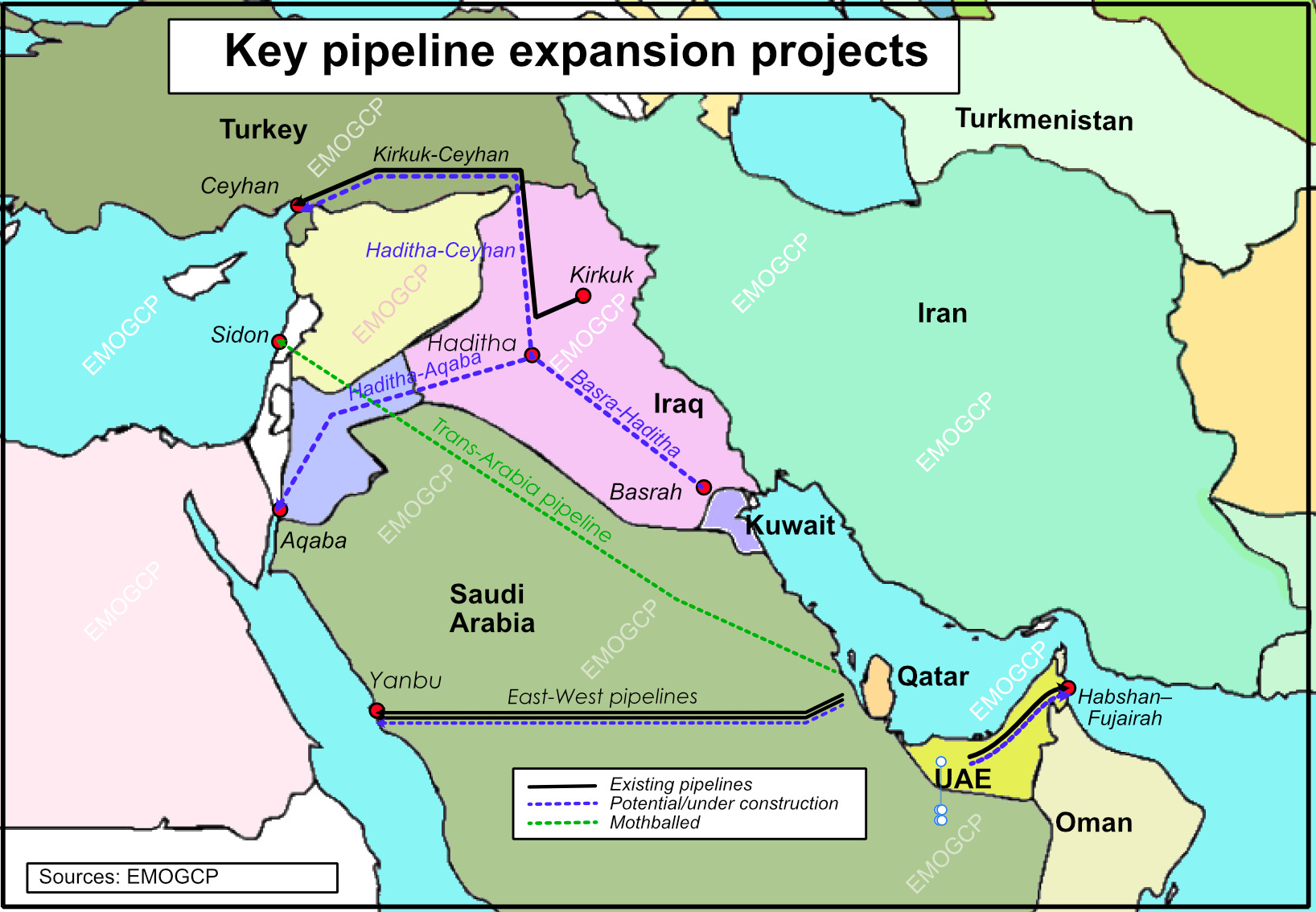
New pipeline projects are popping up everywhere
As we suggested in “Post-Iran logistics – The Age of the Pipeline Cometh!”, the start of the Iran Crisis has changed the strategic calculus for Middle Eastern oil producers. Going forward, we believe that all of the countries dependent upon the Strait of Hormuz – Iraq, Kuwait, Qatar, Bahrain, the UAE, Saudi Arabia, and even Iran – will be proactively looking to develop alternative exports routes for their oil and refined products.
Summary of the current state of play
As we all know by now, immediately prior to the start of the Iran Crisis, some 20mm barrels of oil and product exports transited the Strait of Hormuz daily. However, not all of that amount has been lost to world markets due to the following:
‘Dark transit’, or ships sneaking through the Strait of Hormuz with AIS transponders off in the middle of the night, may still be delivering 1-2mmbpd of oil to market.
Saudi Arabia redirected possibly 5mmbpd to its previously under-utilized, 7mmbpd East-West pipeline, which runs to the port of Yanbu on the country’s Red Sea coast.
The UAE similarly boosted flows along its Habshan-Fujairah pipeline to the Gulf of Oman from approximately 1.1mmbpdimmediately prior to the start of the conflict to 1.5-1.8mmbpd.
Iraq has boosted exports as much as it could along its ageing Kirkuk-Ceyhan pipeline, from zero in March to 150-250kbd today following repairs and a new agreement with the Kurdistan Regional Government (KRG). Iraq may increase flows to 400kbd and even as much as 650kbd in the coming months, if volumes from the Basrah region can be moved north and pipeline repairs and upgrades can be completed. However, the nominal 1.5mmbdp nameplate capacity of the 50-year-old pipeline is out of reach due to its age and insufficient maintenance over the decades.
The steps outlined above are all emergency measures, and leave a gap of 12-13mmbpd between the previous Strait of Hormuz volumes and current total exports from the region. A full, lasting resolution to the current crisis can only be delivered via new, high-capacity pipelines.
Not surprisingly, in the last two months we have seen notable progress on two pipelines, and early signs that at least two more are in the works.
